L30 Technical Characteristics
Technical Characteristics
LOA – 9.58 m (31'5")
Lhull – 9.25 m (30'4")
LWL – 9.20 m (30')
Max. Beam – 2.54 m (8'4")
Draft keel down – 1.88 m (6'1")
Draft keel up – 0.58 m (1'10")
Height from waterline to mast top (bridge clearance) – 13.15 m (43'2'')
Full displacement – 1820 kg (4629 lbs)
Keel ballast weight (lead bulb) – 790 kg (1763 lbs)
Main – 29.8 m2
J1 – 22.7 m2
J2 – 16 m2
J3 – 13.5 m2
A2 – 83 m2
A3 – 74 m2
Code0 – 55 m2
Propulsion – electric or diesel motor with a two-blade folding propeller
Hull Material: vynilester vacuum infusion sandwich
Hull Finish: Gel Coat
Naval architect: Justin Yacht Design
Gennaker

Two gennakers provide for performance in differing wind strengths or directions
Code 0
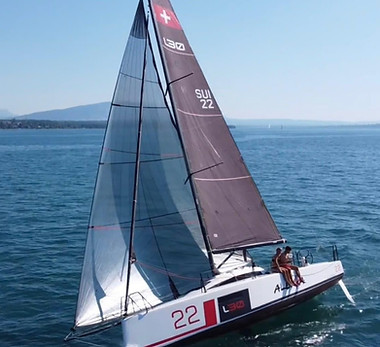
The L30 Code 0 exhibits exceptional performance, for example, 2.8 knots boat speed in 1.9 knots TWS
J1, 2 and 3

Three jibs are designed to sustain speed through the wind ranges from light to survival conditions.
Trim tabs

The trim tab fine tunes performance upwind and also has a useful effect in very strong wind downwind
Twin lifting rudders

Twin retractable rudders are a safety and performance feature. In light winds one can be lifted.
Spars

All Pauger carbon composite spars including compression carbon kicker.
Lifting keel
The keel is raised with a pulley system by deck winch by one or two people with a winch handle
Carbon dual wheels

The carbon wheels not only make the boat pleasurable to steel on all angles, they are light,
Retractable bowsprit
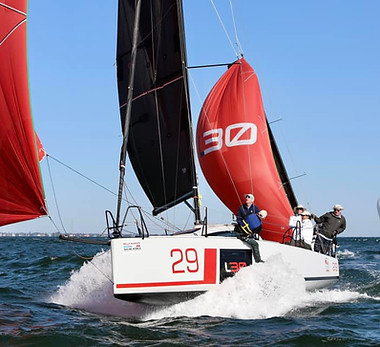
The bowsprit is retractable and controlled by lines led back to the cockpit.